Self Employed Mortgage
Self Employed
Mortgage
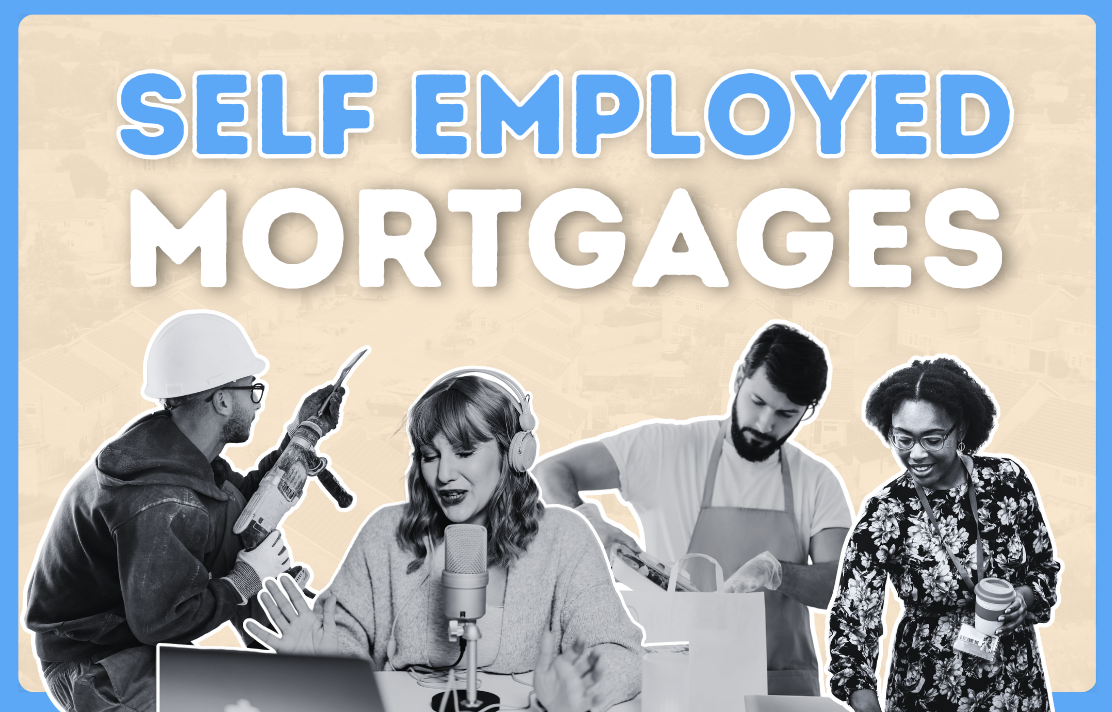
Self-employed mortgages don’t have to be hard. With the right guidance, you can buy or remortgage without added stress.
What Is A Self Employed Mortgage?
Whether you’re a freelancer or run your own business, self-employed mortgages work the same as standard mortgages the key difference is the evidence lenders require. Typically, you’ll need two to three years of accounts, proof of earnings, and tax information. While the selection of deals may sometimes be smaller, self-employed borrowers can still access competitive mortgage options with the right guidance.
When Am I Considered Self Employed?
You’re considered self-employed for a mortgage if your main income comes from your own business and you own 20% or more of it. This includes working as a sole trader, freelancer, partner, limited company director, or contractor.
- Sole Traders / Freelancers: Running your own business and managing your own taxes.
- Limited Company Directors: Owning a significant share (20–25%+) and taking income through salary or dividends.
- Partners: Sharing profits in a partnership.
- Contractors: Working through your own limited company or as a sole trader for clients.
We search 1000’s of products to find the best deal for you


How many years do you have to be self-employed to get a mortgage?
Most lenders prefer that you’ve been self-employed for two to three years. This helps them see a consistent and reliable income history.
In some cases, if you’ve been self-employed for less than two years, certain lenders may still consider your application, especially if you have a larger deposit, strong financial records, or a steady contract-based income.
The key is demonstrating a stable and sufficient income from your business, so lenders are confident you can manage repayments.
Things to Consider
Benefits
Use Projected Earnings to Support Your Application
Self‑employed borrowers can sometimes include projected earnings in their mortgage application. This means lenders may take future contracts, confirmed work or expected profits into account, helping you borrow more than if only past income was considered.
Flexibility for Company Directors
If you’re a director of your own limited company, lenders may consider different components of your income, such as a mix of salary and dividends or salary and net profit, which gives you greater flexibility when establishing what you can afford.
Access to Helpful Borrowing Schemes
As a self‑employed borrower you may also be able to take advantage of schemes designed to boost borrowing power, depending on your circumstances. Speaking with a UKMC adviser can help you understand which options could work for you.
Considerations
Need for Strong Income Evidence
Because your income doesn’t come through PAYE, lenders often ask for two to three years’ worth of accounts, self‑assessment tax returns and bank statements to assess affordability. This means gathering and organising documentation can take more time and preparation.
Limited Access to Some Deals
Some mortgage products, such as high‑loan‑to‑value deals with minimal deposits, may be reserved for employed applicants. As a result, the range of deals available to you might be more restricted compared with someone on a standard payroll.
Tax Evidence Must Be Provided
You’ll usually need to provide tax evidence such as SA302 tax calculations or HMRC tax year overviews. This helps lenders understand your income history, but it does mean more paperwork compared with standard employment applications.
as seen on


Why Choose UKMC
Simple, Straightforward Approach
Thousands of Products
We search the whole market, comparing thousands of mortgage deals. Whether your income has changed or your deposit is smaller than expected, we’ll find a solution that fits your situation.
Dedicated Case Manager
From your first call, you’ll have a dedicated mortgage advisor and case manager. They’ll liaise with lenders, surveyors, and solicitors on your behalf, making the process smoother and saving you time.
Free Property Insights and Reports
With our online portal, you can quickly access detailed reports about your chosen property, making it easier to make informed decisions. Reports include:
- Broadband speeds – Check connectivity before moving in.
- Energy efficiency rating – Know how much your bills might be.
- Local property trends – See prices in your postcode and compare similar homes.
- Area insights – Find out about crime rates, common professions, and property types nearby.
- Environmental info – Flood risk, geology, radon, and nearby infrastructure projects.
Plus, our handy home-buying checklist keeps you organised at every step.
Flexible Appointment Options
Life can be hectic, and we get it, especially if you’re juggling a 9–5. That’s why we offer late-night appointments five days a week. We’ll work around your schedule, so getting advice is easy and stress-free.
How to Apply for a Self Employed Mortgage?
Contact a qualified accountant
Obtaining mortgages for the self-employed in the UK is more complex than salaried employees applying for the same mortgage. This is why a consultation with a qualified accountant is essential if you want to ensure your accounts are in order.
Boost your deposit and credit score
If you want to be seen as more attractive to lenders, then spending a little more time saving for a deposit and improving your credit score can make a difference. This will reassure lenders that you’re less of a risk.
Gather necessary evidence
To be able to demonstrate your affordability, you must gather evidence, typically two to three years’ worth of accounts, of your earnings, future earnings, and taxes. Lenders will often ask for your SA302 forms as evidence of your self-employed income.

Contact a mortgage advisor
The evidence you need to provide to a lender will not only vary depending on your self-employment arrangement, but also upon the lender themselves and their eligibility and affordability criteria. As a result, it’s always advisable to contact an experienced mortgage advisor, like UKMC, to discuss your options and receive expert support with choosing the most appropriate lender and deal to suit your specific circumstances.
what our clients saying about us
At the end of my tether I was introduced to Sam from UKMC.
Previous advisors had failed to find me any deals worth looking at and I was feeling most despondent. Destined to continue paying waaaay too much for my mortgage.
Creative Director, TUX Creative Co
At the end of my tether I was introduced to Sam from UKMC.
Previous advisors had failed to find me any deals worth looking at and I was feeling most despondent. Destined to continue paying waaaay too much for my mortgage.
Independent Art Director
At the end of my tether I was introduced to Sam from UKMC.
Previous advisors had failed to find me any deals worth looking at and I was feeling most despondent. Destined to continue paying waaaay too much for my mortgage.
Creative Developer, Studio Gusto
Frequently asked questions
Got questions? Let’s answer them
Can I get a mortgage if I’m newly self-employed?
Yes, some lenders will consider applicants who have been self-employed for less than two years, especially if you can provide a large deposit, proof of ongoing contracts, or strong financial records. Specialist lenders often cater to these cases.
How does being a contractor affect my mortgage application?
Contractors are treated like other self-employed borrowers. Lenders will usually ask for 12–24 months of contracts or accounts and may look at average income over that period. Regular, predictable contracts improve your chances of approval.
Can I borrow more as a self-employed borrower with a partner who’s employed?
Yes. A joint application with an employed partner can increase affordability and open access to a wider range of mortgage deals, as the lender considers both incomes.
Can I use dividend income from my company for a mortgage?
Are self-employed mortgages more expensive?
Not automatically. Your interest rate depends on your income stability, deposit size, credit history, and the lender. If you can demonstrate consistent earnings, self-employment alone does not mean higher rates.