



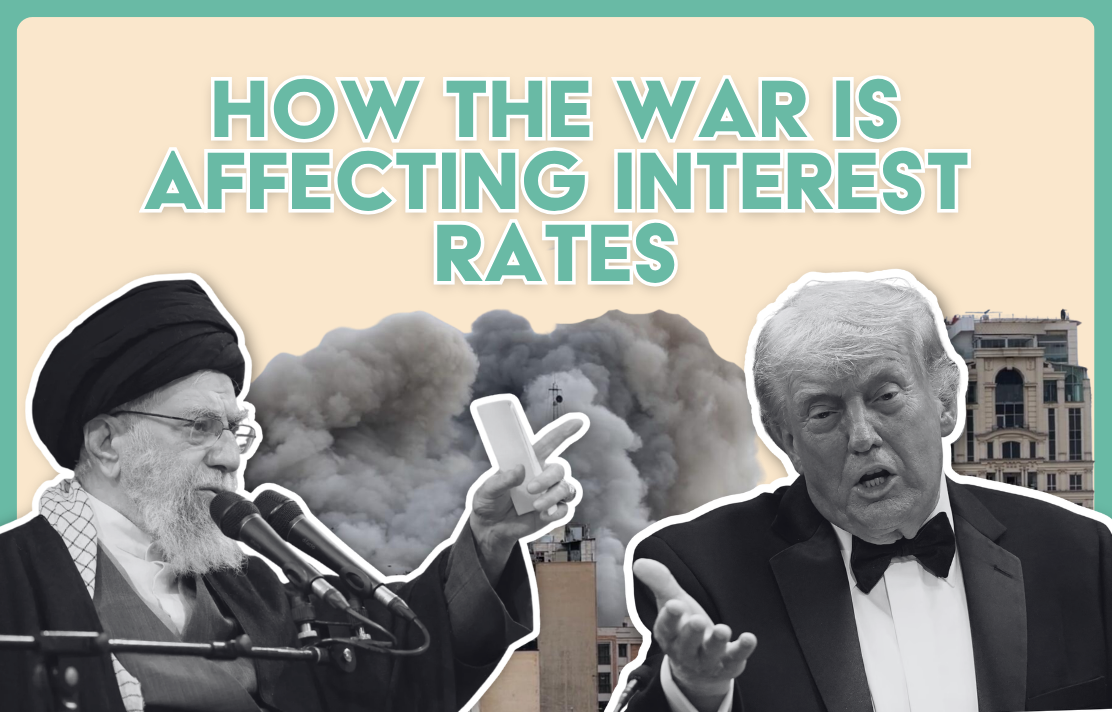
Just when it looked like UK mortgage rates were finally heading down, global events have shifted the direction overnight. The ongoing conflict involving Iran has quickly become a key driver of rising borrowing costs and it’s already feeding through into the mortgage market.
If you’re wondering what the Iran war impact on mortgages really means for you, here’s a clear and up-to-date breakdown.
How the Iran war is affecting UK mortgage rates
The link between war and mortgages might not seem obvious, but the chain reaction is actually quite straightforward.
Rising energy prices are pushing inflation higher
The conflict has disrupted global oil and gas supplies, particularly through key routes like the Strait of Hormuz. This has pushed energy prices up sharply, which feeds directly into UK inflation.
Recent data shows UK inflation rose to 3.3% in March, with energy costs a major contributor and further increases are expected as the effects of the conflict continue.
Higher inflation is changing interest rate expectations
When inflation rises, the Bank of England becomes more cautious.
Instead of cutting interest rates, which many markets had expected earlier in 2026, policymakers are now more likely to hold rates higher for longer. In some scenarios, further increases can’t be ruled out.
Even though some short-term inflation indicators have recently stabilised, economists still expect upward pressure from energy costs linked to the Iran conflict in the months ahead.
Mortgage rates follow market expectations
Mortgage lenders price their deals based on future expectations not just today’s base rate.
Those expectations have shifted quickly:
- Swap rates (which underpin fixed-rate mortgages) have risen
- Government borrowing costs have climbed above 5% amid oil-driven inflation fears
- Lenders are repricing deals to reflect a “higher for longer” rate environment
The result? Mortgage rates have increased rapidly.
What’s happening to UK mortgage rates right now?
The Iran war impact on mortgages is already visible across the market:
- Average two-year fixed rates have risen from around 4.8% to 5.5%
- Average five-year fixed rates have climbed from roughly 4.95% to around 5.7%
At the same time:
- Over 1,500 mortgage products have been withdrawn since the conflict escalated
- Around three in four lenders have repriced or pulled deals in recent weeks
- This is one of the fastest shifts in mortgage pricing since the 2022 mini-budget shock.
What this means in real terms
For borrowers, even small rate changes make a big difference.
On a £200,000 mortgage over 25 years:
- A rise from around 4.8% to 5.5% adds roughly £90 per month
- That’s close to £1,000 extra per year in repayments
And for larger loans, the impact is even more significant.
A fast-moving and unpredictable market
One of the biggest challenges right now is speed.
Mortgage deals are:
- Being repriced daily
- Withdrawn with little notice
- Replaced with higher-rate alternatives
This volatility is being driven by global uncertainty, oil price movements, and constantly shifting expectations around inflation and interest rates.
Will mortgage rates fall again?
It depends largely on what happens next in the conflict.
If energy prices stabilise, inflation could ease, allowing rates to fall
If the war escalates or supply disruptions worsen, mortgage rates could rise further
For now, the market remains highly sensitive to headlines.
In a fast-moving market like this, timing can make all the difference. If you’ve seen a deal that works for you or you’re not sure what your options are, it’s worth getting expert guidance sooner rather than later.
Speak to the friendly, experienced team of brokers at UKMC today. We’ll help you navigate the latest rate changes, explain your options clearly, and secure the most suitable deal for your circumstances before it disappears.